Platelet-rich plasma injected into a painful joint — knee, hip, shoulder — to calm inflammation and support the tissue's own repair. Your blood, drawn here, concentrated here, put back the same visit. No surgery, no steroids, no pill to take every day. For osteoarthritis, tendon and ligament injuries, cartilage damage, bursitis and joint pain that has stopped answering to everything else.
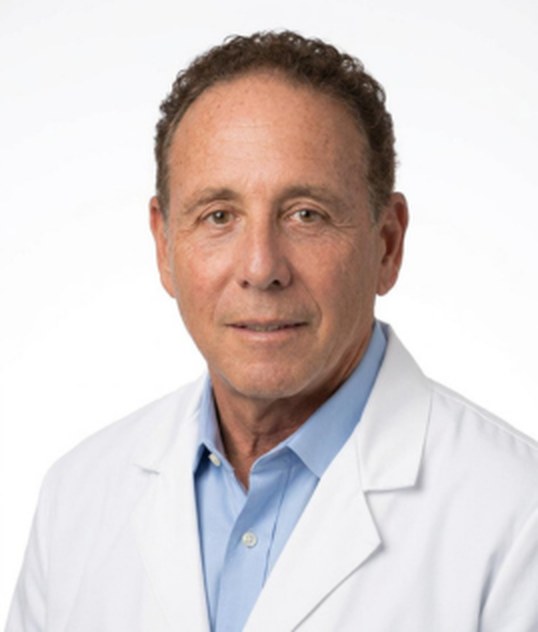
Bruce J. Stratt, MDAge management medicine fellowship, University of South Florida · Treating Boca Raton since 2014
★ 4.9 · 41 Google reviewsOne visit, start to finishNo surgery, no steroidsKnee · hip · shoulder
Takes about 30 seconds. Weekdays 10–4 we call back within the hour.
The appointment, start to finish
One visit. Your own blood, back into your own joint.
Nothing is added, nothing comes from a donor, and the entire sequence happens in a single appointment at one office on Beracasa Way. Patients come in from Delray Beach, Boynton Beach and Deerfield Beach for it. If you want the underlying biology first, start at our PRP and regenerative medicine hub.
01
Consultation
We examine the joint, go through your history and any imaging you already have, and tell you whether PRP is a reasonable tool for it. PRP is not an option for everyone — the consultation exists to find that out.
02
Blood draw
A small sample, taken here, no different from a standard lab test. You stay in the chair while it is processed.
03
Centrifuge and preparation
The sample is spun rapidly to separate the platelets — the fraction rich in growth factors — from the other blood components. Those concentrated platelets go back into the plasma. What comes out is platelet-rich plasma: a solution carrying the proteins and growth factors that help heal tissue and reduce inflammation.
04
Injection into the joint
The platelet-rich plasma is injected directly into the painful or damaged joint — knee, hip, shoulder. Ultrasound may be used to guide the needle, so the plasma lands where the damage is rather than near it. Minimally invasive, and you walk out.
Most people arrive after being told surgery is the last resort, wanting something before that. Orthopedic PRP is used for the joint problems below.
Osteoarthritis
Stiff, worn, painful joints
The most common reason patients come in for this. PRP injections are used to help reduce stiffness and improve joint function — working on the inflammation inside the joint rather than masking the pain signal from outside it.
Tendons
Tendonitis and tendon injuries
PRP joint injections support the natural healing of tendon tissue, with reduced pain and swelling. Tendon repairs slowly on its own because it is poorly supplied with blood — the injection delivers growth factors the tendon cannot easily get to itself.
Cartilage
Cartilage damage
Platelets are injected at the damaged surface to support the body's own repair.
Bursitis
Inflamed bursae
The small fluid-filled sacs that let tendon glide over bone become inflamed, and every movement in that direction hurts. PRP is used here to relieve pain and restore mobility.
Ligament tears, muscle injuries, sprains and strains — the injuries that heal, but slowly, and never quite feel finished. PRP delivers growth factors directly into the injured tissue to facilitate healing.
No surgery. No steroid. Nothing to take every day.
Joint pain usually gets handled one of three ways: a pill, a steroid injection, or an operation. PRP is a fourth option — for the right patient, a practical, evidence-based, non-surgical one.
Drug-free
No pain medication, no steroids
No pain medications or steroid injections are used. What goes into the joint is made from your own blood — nothing synthetic, and nothing you have to keep taking.
Downtime
Minimally invasive, no operation
No incision, no anaesthetic, no weeks on crutches. Most people get back to their daily activities quickly with a few restrictions at first — the practical reason patients choose it over an operation they were dreading.
Your own biology
Repair, not suppression
Platelets are what your body already sends to an injury. Concentrating them and placing them at the damage does more of what your body was going to attempt anyway — which is why the aim is long-term healing rather than a few weeks of quiet.
The plasma is prepared and injected here, under sterile technique and using FDA-compliant equipment, by your provider — physician-supervised, with Dr. Stratt consulting on the case.
Two different patients
The joint that has hurt for years, and the one hurt last month.
PRP is not only for joints that have hurt for years. PRP injections can also be used for injury recovery — a sports injury, a ligament strain, a muscle tear — where the tissue is healing but slowly.
Chronic
Long-standing joint pain
Arthritis, worn cartilage, a knee that has been getting worse for years, a shoulder that has quietly narrowed what you are willing to do. Here PRP is aimed at calming inflammation, reducing pain and restoring mobility so you can get back to the things you had started giving up.
Growth factors delivered straight into injured tissue to facilitate healing, so recovery is supported rather than simply waited out. Used for sprains, strains and soft-tissue injuries, with no surgery involved.
PRP asks your own body to do the repair, which makes it a genuinely good option for some joints and the wrong one for others. It is not for everyone — which is why we evaluate the joint before quoting anything.
PRP may suit you if you
Have joint pain, arthritis, tendon or ligament injuries, or a sports injury
Want to avoid surgery and a long recovery
Prefer a natural, drug-free alternative to pain relief
Have been told surgery is the last resort and want something before it
Can give the treatment weeks to work rather than days
What we say out loud first
PRP is not an instant fix — improvement is gradual, over weeks
Results vary, and nobody can promise you a specific outcome
It does not replace an operation you genuinely need
Blood or platelet disorders, and active infection in the joint, rule it out
If the consultation says PRP is not the right tool, we will tell you that instead of selling you a series
What to expect afterwards
Sore first. Better later.
Worth knowing before you book: the first few days do not feel like progress, and the following weeks do.
Days 1–3
Mild discomfort
It is normal to feel some soreness at the injection site — the joint responding to what was placed in it, not a complication. We tell you what is expected and what is worth calling us about.
Weeks
Gradual improvement
Healing continues over weeks as the tissue regenerates. Most patients notice meaningful change over the following weeks rather than the following day, as the body does the repair naturally.
Activity
Light first, then back to normal
Start with light activity and build up, returning gradually to what you were doing before the injection. There is no formal recovery period, and most people resume their normal activities without lasting restrictions.
Who you'll see
Two providers. One office. Since 2014.
You will know which provider you are seeing before you arrive. It is a small team at one Boca Raton office, physician-supervised, and LifeBoost is self-pay — so no insurance company is deciding how many minutes your knee gets.
Bruce J. Stratt, MD · Medical DirectorAge management medicine fellowship, University of South Florida · Member, American Academy of Anti-Aging Medicine
Gabrielle Janney, PA-C · Physician AssistantNationally certified PA · Duke University PA Program · Nearly a decade in clinical medicine
4.9
★★★★★
41 Google reviews · Boca Raton, Delray Beach, Boynton Beach & Deerfield Beach
Not the same day. Expect mild soreness at the injection site first, then gradual improvement as the tissue heals over the following weeks. PRP is asking your own body to do repair work, and repair takes the time it takes. If you need something that switches pain off this afternoon, this is the wrong treatment and we will say so.
Is this the same as a cortisone shot?
No. A steroid injection suppresses inflammation with a drug. PRP puts a concentrated dose of your own platelets and growth factors into the joint and asks the tissue to heal. No pain medications or steroid injections are used in this treatment, and nothing synthetic goes into the joint.
Does it hurt, and how long am I out?
The blood draw feels like a routine lab test. The injection itself is minimally invasive and most people tolerate it well, with some soreness at the site afterwards. There is no operation and no formal recovery period — most people get back to their daily activities quickly with a few restrictions at first, keeping to light activity before returning gradually to what they were doing before.
I have been told surgery is my only option. Is PRP still worth asking about?
It is worth asking, and there is no obligation in asking. Many patients come to us specifically because they were counselled toward surgery and want a non-surgical option first. But PRP is not right for everyone, and we will not tell you it replaces an operation you genuinely need. That is what the consultation is for — we look at the joint and give you a straight answer.
What does it cost, and do you bill insurance?
LifeBoost is a self-pay practice and PRP is not billed to insurance. We tell you what we are recommending and what it costs, in writing, before you commit to anything.
This page is for general information and is not medical advice. Whether any treatment is appropriate for you is determined after evaluation and, where indicated, laboratory testing.
★★★★★
"I had been struggling with knee pain for a while, and their approach to treatment really made a difference. […] Thanks to their expert care, my knee pain has significantly improved, and I feel better than I have in years."